A split-spoon sampler drives into the silty clays off Route 59, and the blow counts tell a story. Aurora sits on a complex mix of glacial till, outwash deposits, and the fine-grained sediments of the Fox River floodplain. A standard soil mechanics study here has to reconcile what the driller sees with what the lab measures. We run a full suite of index and strength tests — grain size distributions per ASTM D6913, Atterberg limits per ASTM D4318, and consolidation curves when the varved clays east of downtown start showing their compressible nature. The goal is a site-specific geotechnical model that holds up under IBC Chapter 18 review. When the split spoon comes up with more silt than expected, we often pair the investigation with a CPT test to map continuous stratigraphy across the parcel without losing the thin sand seams that control drainage.
Glacial soils in Aurora don't read the textbook — the lab results from a single Shelby tube can change the entire foundation strategy.
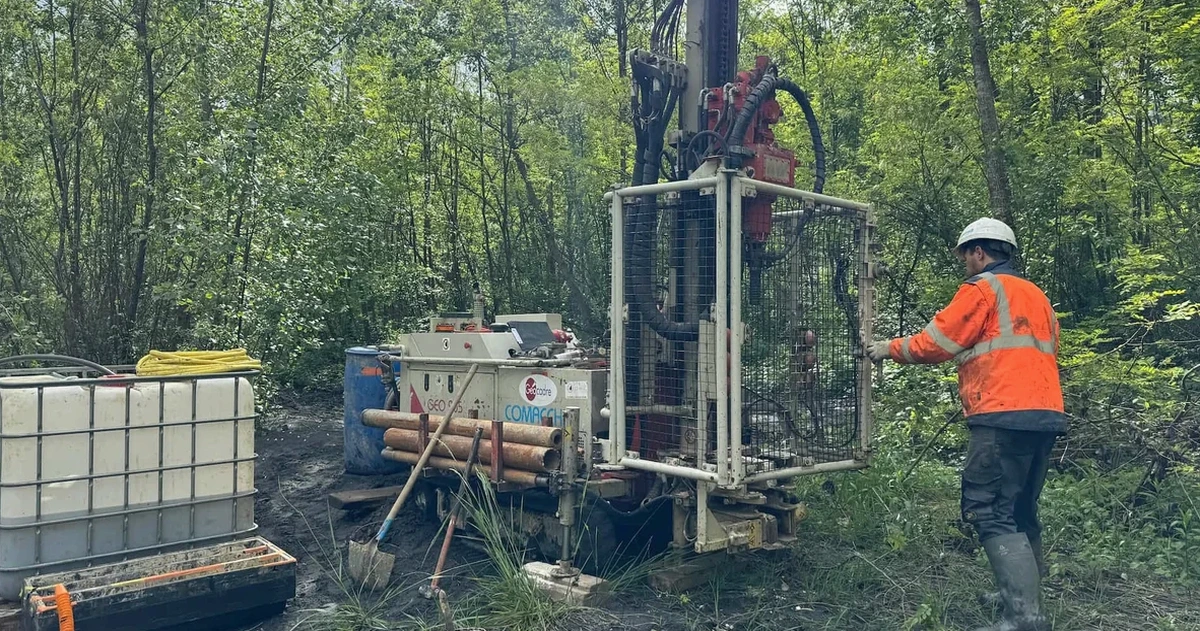
Technical details of the service in Aurora
Local geotechnical conditions in Aurora
We see it all the time in Aurora — a geotechnical report based on two borings and a pocket penetrometer, submitted for a permit on a site with 20 feet of compressible clay. The city's building department is sharp. They'll flag it. The real risk isn't just a permit delay; it's a foundation that settles unevenly three years after occupancy, cracking drywall and binding doors. The Fox River valley has pockets of organic silt and peat that a standard probe won't catch if the boring spacing is too wide. A proper soil mechanics study also screens for frost depth issues — Aurora's 42-inch frost line means shallow footings need protection. Ignoring the lab phase of the study is where the liability stacks up. We've testified in deposition cases where the failure traced back to a missing consolidation test. That's a conversation no owner wants to have.
Our services
The soil mechanics study for your Aurora project includes field investigation and lab testing as an integrated package. We don't split them because the lab data calibrates the field logs.
Full Soil Mechanics Package
Drilling, sampling, SPT N-value recording, lab index tests (moisture, density, grain size, Atterberg), strength tests (UU triaxial or direct shear), and consolidation analysis. Delivered as a stamped geotechnical report with bearing capacity and settlement recommendations.
Supplemental Lab Testing Only
For projects where the drilling was done by others, we run the mechanical and index tests on your samples. Classification per USCS, Proctor curves, and triaxial strength. Report includes a review of the field logs for consistency.
Quick answers
How long does a soil mechanics study take in Aurora?
From mobilization of the drill rig to the final stamped report, plan on three to four weeks. Fieldwork takes two to three days for a typical commercial lot. Lab testing runs seven to ten business days depending on consolidation time. The report writing and senior review adds another week. We can expedite for an additional fee if your permit deadline is tight.
What does a soil mechanics study cost for a single-family home lot in Aurora?
Does the City of Aurora require a soil mechanics report for a building permit?
Yes. The City of Aurora building department enforces IBC Chapter 18, which requires a geotechnical investigation for all new structures except very minor additions. The report must be stamped by an Illinois-licensed professional engineer and include soil classification, bearing capacity, and settlement analysis specific to the lot.
What lab tests are included in the study?
The standard package includes natural moisture content, dry density, Atterberg limits, and grain size distribution with hydrometer for fines. We add unconsolidated-undrained triaxial tests when we need undrained shear strength for bearing capacity calculations. If the soils are soft and compressible, we run one-dimensional consolidation tests to predict settlement magnitude and rate.
Can you do the study in winter when the ground is frozen?
Yes, we drill year-round in Aurora. Frozen ground slows the augering but doesn't stop it. The bigger challenge is frost in the upper 42 inches — we log the frozen layer separately and note it in the report. Lab samples are taken below the frost zone where the soil is undisturbed. The report includes a frost protection recommendation per ASCE 32.