The foundational geotechnical context in Aurora is predominantly shaped by its glacial history, resulting in a complex stratigraphy of interbedded tills, glaciolacustrine clays, and outwash sands. These deposits exhibit variable bearing capacities, often requiring rigorous subsurface investigation to delineate the presence of soft, compressible clay lenses or loose sand strata that can induce differential settlement. Moreover, the region experiences significant seasonal frost penetration, with a design frost depth of approximately 1.2 meters, necessitating footings placed below this line to mitigate frost heave. Expansive clay soils, common in certain municipal zones, pose additional challenges due to volumetric changes with moisture fluctuations, demanding careful consideration of soil moisture conditioning and foundation isolation. The water table is typically encountered at moderate depths, yet localized perched aquifers can complicate excavation and necessitate dewatering measures. Primary technical concerns include the mitigation of long-term consolidation settlement in clay-rich areas and the provision of adequate lateral resistance against potentially high seismicity, as Aurora falls within a moderate seismic risk zone requiring adherence to dynamic soil-structure interaction principles.
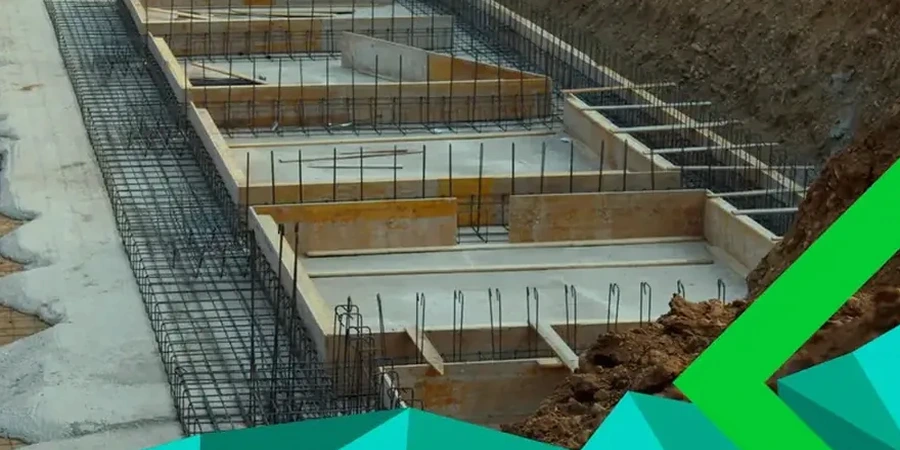
Foundation methods in Aurora are tailored to address the variable geotechnical conditions identified during site-specific explorations. Shallow foundations, including continuous spread footings and reinforced concrete mat slabs, are commonly employed for low-rise residential and light commercial structures, particularly when surface soils exhibit adequate bearing capacity exceeding 150 kPa and are well-drained. For sites underlain by compressible clays or loose sands, deep foundation systems are frequently specified. Driven precast concrete piles and steel H-piles are utilized to transfer loads to competent glacial till or bedrock strata, often terminating in dense granular layers at depths ranging from 10 to 25 meters. Auger-cast piles and drilled shafts are also adopted where vibration-sensitive adjacent structures exist. In areas prone to expansive soils, post-tensioned concrete slabs or pier-and-beam systems are designed to accommodate ground movements. Soil improvement techniques such as dynamic compaction or stone columns are applied in deep fills or soft alluvial deposits to enhance bearing capacity and reduce settlement prior to footing construction.
Local standards governing foundation design and construction in Aurora are codified through municipal amendments to the state building code, incorporating specific provisions for frost protection, seismic design, and expansive soils. The Aurora Municipality mandates that all foundation plans undergo geotechnical peer review for structures exceeding three stories or those with significant geotechnical risk. Design parameters, including allowable bearing pressures and lateral soil resistance, must be derived from laboratory testing following ASTM standards, with site-specific reports prepared by licensed geotechnical engineers. The local code enforces a minimum footing depth of 1.2 meters below the finished grade to preclude frost effects, with additional reinforcement required for footings on expansive soils. Seismic provisions align with the latest version of the International Building Code (IBC), requiring dynamic analysis for structures on soft clay sites. Additionally, the municipality requires pre-construction soil testing for moisture content and plasticity indices in areas mapped as expansive by the local geological survey. Drainage and waterproofing specifications are stringent to maintain soil moisture equilibrium around foundations.
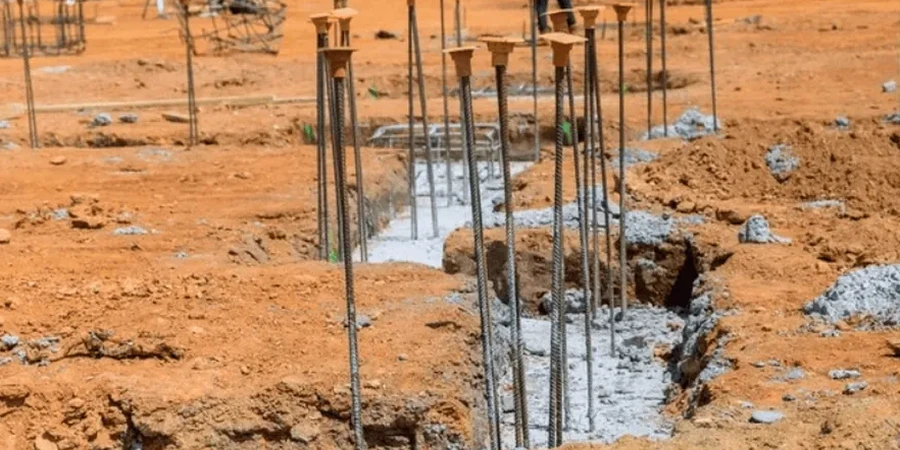
The applications of this foundation engineering expertise in Aurora span residential subdivisions, commercial developments, and critical infrastructure projects. In new residential communities, shallow spread footings are the standard for single-family homes on stable glacial tills, while multi-family buildings often employ mat slabs or pile-supported rafts to address higher loads and variable soil conditions. Commercial and industrial facilities, including retail centers and warehouses, commonly utilize deep pile foundations when sited on former agricultural land underlain by compressible clay deposits. Infrastructure projects such as bridge abutments and retaining walls require drilled shafts or driven piles to resist lateral and vertical loads against scour and seismic events. Notably, Aurora’s recent mixed-use high-rise developments have employed deep foundation systems with large-diameter drilled shafts socketed into competent shale bedrock. Retrofitting existing foundations with helical piles or micro-piles is a growing application for historic building preservation where underpinning is necessary. Each project’s design embraces localized geotechnical data, ensuring long-term structural performance and compliance with rigorous local standards that prioritize safety and durability.