We have seen too many earthwork specs in Aurora go sideways because the soil classification was based on visual inspection alone. A silty clay from the west side near the Fox River can look identical to a lean clay from the east side until you run the numbers. The difference shows up months later as differential settlement in a slab or heave under a footing. Atterberg limits give you those numbers—liquid limit, plastic limit, and plasticity index—so you know exactly how the material will behave when it gets wet, dries out, or cycles between the two. For projects that involve cut-and-fill, stormwater basins, or pavement subgrade, pairing this lab work with Proctor tests ensures your compaction spec matches the soil you actually have, not the one you assumed.
Plasticity index is the single most important number for predicting shrink-swell behavior in Aurora’s silty clays—skip it and you inherit the risk.
Technical details of the service in Aurora
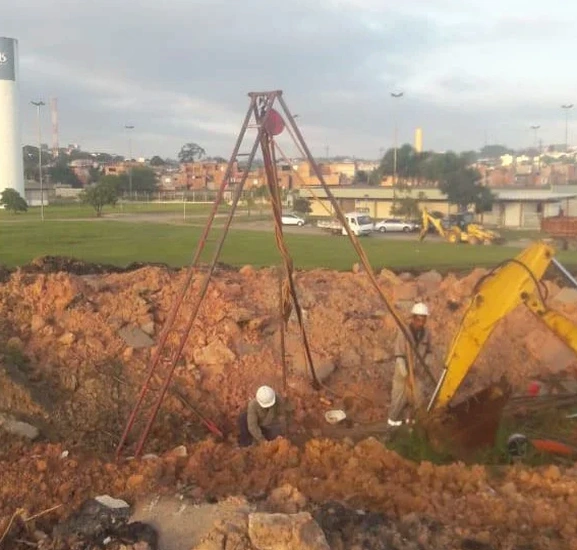
Local geotechnical conditions in Aurora
Aurora’s expansion after the 1980s pushed development into areas where the surficial geology transitions from the Henry Formation sands into the Equality Formation silts and clays—fine-grained soils that can hold water for months after a wet spring. When Atterberg limits are not run on these materials, the contractor often guesses at the optimum moisture for compaction and gets it wrong. Over-compacting a high-plasticity clay on the wet side of optimum leaves the soil structure oriented, trapping water and creating a pavement section that pumps fines with every freeze-thaw cycle. Under-compacting on the dry side leaves voids that collapse after the first irrigation season. Either way, the owner pays for it: cracked slabs, heaved curbs, or a failed proof roll that shuts down the job.
Our services
Our Aurora lab runs the full suite of index property testing on a single sample so you get a complete picture without having to coordinate multiple vendors. Every report is reviewed by a geotechnical engineer familiar with Illinois basin soils.
Liquid Limit & Plastic Limit (Atterberg Limits)
Full ASTM D4318 determination using the Casagrande cup method for liquid limit and the 3.2 mm thread rolling method for plastic limit. Results are reported with natural moisture content and used for USCS classification.
Plasticity Index & Shrink-Swell Assessment
PI calculation with interpretation of expansive potential based on correlations from Holtz & Kovacs and local Illinois experience. Essential for slab-on-grade design and pavement subgrade evaluation.
Combined Index Package (Atterberg + Grain Size)
Single-sample package that includes sieve analysis (ASTM D6913) and hydrometer (ASTM D7928) plus Atterberg limits. Delivers a defensible USCS classification and soil behavior type for the geotechnical report.
Quick answers
How much does Atterberg limits testing cost in Aurora?
What is the difference between liquid limit and plastic limit?
The liquid limit is the moisture content at which the soil changes from a plastic state to a liquid state—measured with the Casagrande cup device. The plastic limit is the moisture content where the soil transitions from semi-solid to plastic, determined by rolling a soil thread to 3.2 mm diameter until it crumbles. The difference between the two is the plasticity index.
How long does Atterberg testing take?
Typical turnaround is 3 to 5 business days from sample receipt. We can expedite to 24–48 hours when the contractor is waiting on results to make a go/no-go decision on backfill material.
Do I need Atterberg limits for a residential foundation in Aurora?
If your lot is in an area with known silty clay soils—common west of the Fox River in Kane County—the structural engineer will typically require Atterberg limits to assess shrink-swell potential and determine the appropriate foundation depth. Skipping this test on a slab-on-grade can lead to cracking within the first two years.
What is a good plasticity index for backfill material?
For most structural backfill and pavement subgrade applications in the Aurora area, a plasticity index below 15 is preferred. Material with PI above 25 is generally considered highly plastic and may require lime stabilization, undercutting, or replacement with granular fill to meet compaction and drainage requirements.