Aurora sits at 718 feet above sea level, straddling the Fox River on glacial outwash plains and lakebed sediments left by the Wisconsin glaciation. That geology directly shapes every footing placed here. In our experience, the biggest variable is the top 10 feet — dense silty clay over loose sand lenses, occasional organics in low-lying pockets near the river. About 197,000 people call Aurora home, and the city’s growth westward into former farmland means new construction keeps encountering fill soils of unknown compaction. Before placing a spread footing, we need to confirm bearing capacity exceeds 2,000 psf and that differential settlement stays under ¾ inch. We often pair shallow foundation design with test pits on those former agricultural sites to verify fill depth and consistency before committing to a footing geometry.
A 2,500 psf presumptive bearing value can work in Aurora’s glacial till — but only after confirming the till is continuous and unweathered across the entire footing footprint.
Technical details of the service in Aurora
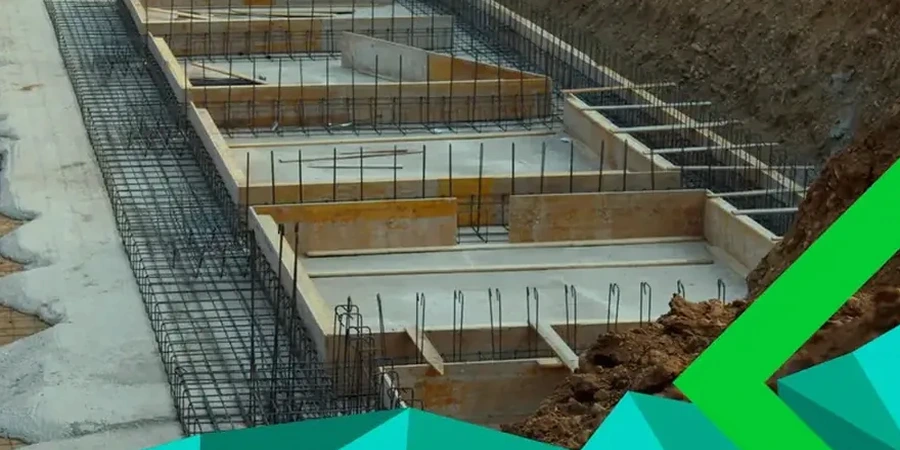
Local geotechnical conditions in Aurora
IBC Chapter 18 requires a geotechnical investigation for all structures except certain light-frame dwellings. In Aurora, skipping that investigation creates two specific risks. The first is differential settlement where a footing spans from stiff till onto a pocket of softer lacustrine clay — we have measured 1.5 inches of movement across just 20 feet in these transition zones. The second risk is bearing capacity failure in undocumented fill. Former farm properties often have 3 to 5 feet of loose silty fill pushed into old drainage swales, and that material can yield at pressures below 1,500 psf. A third local concern is the Fox River floodplain, where seasonal groundwater rises to within 3 feet of grade and reduces effective bearing strength.
Our services
Our shallow foundation work in Aurora covers the full design chain — from subsurface investigation through reinforcement detailing. Each service below targets a specific piece of the IBC compliance puzzle.
Bearing Capacity Analysis
Terzaghi, Meyerhof, and Vesic calculations calibrated to site-specific soil parameters from SPT borings or test pits. We deliver allowable bearing pressures with settlement estimates for strip, square, and rectangular footings.
Settlement Evaluation
Immediate and consolidation settlement predictions using Schmertmann or Janbu methods. Critical for Aurora’s interbedded clay-silt profiles where total settlement often governs over bearing failure.
Frost-Protected Shallow Foundation Design
Footing geometry and insulation detailing per ASCE 32 for unheated structures. We size the footing depth and horizontal wing insulation to keep the frost bulb outside the bearing stratum.
Reinforcement & Detailing
Flexural and shear reinforcement per ACI 318 for spread footings, strip footings, and combined footings. Drawings include bar schedules, cover requirements, and lap splice lengths.
Quick answers
What presumptive bearing capacity can I use in Aurora without a full geotechnical report?
IBC Table 1806.2 lists presumptive values for various soil types — for stiff silty clay or glacial till common in Aurora, 2,000 to 3,000 psf is typical. However, the code allows these values only when the building official confirms the soil classification at the site. If there is any fill, organics, or groundwater within the bearing zone, a site-specific investigation is mandatory.
How much does a shallow foundation design package cost for a single-family home in Aurora?
What is the frost depth requirement for footings in Aurora, Illinois?
Kane County requires a minimum footing depth of 42 inches below finished grade for frost protection. Unheated structures or those with attached unheated porches may need additional insulation per ASCE 32. We verify the frost depth on every project because a footing set too high will heave during the first hard winter.
Can you design a shallow foundation on fill soil in Aurora?
It depends on the fill type and compaction. Engineered fill compacted to 95% Standard Proctor with documented lift testing can support shallow footings once bearing capacity is verified. Uncontrolled fill — common on older Aurora farm properties — usually requires overexcavation and replacement, or switching to a deep foundation. We make that call based on test pit logs and density testing.