Digital inclinometer probes sliding down grooved casing, vibrating wire piezometers registering pore-pressure shifts in real time, and robotic total stations tracking millimeter-scale movement across a shored face—this is the instrumentation suite our field teams deploy on Aurora excavation sites. The city’s glacial stratigraphy, dominated by the Wedron and Lemont formations with interbedded lacustrine silts, creates a layered groundwater regime that demands continuous verification of the dewatering and support assumptions made during design. Without this feedback loop, even a well-engineered cut can drift toward serviceability problems that are far costlier to correct than to prevent. On projects near the Fox River or along the Route 59 corridor, where adjacent structures are often founded on spread footings from the 1960s, we combine automated total station arrays with manual test pits to calibrate the shallow bearing response before excavation reaches its full depth.
Monitoring data that stays on a USB drive is worthless; the value is in same-day interpretation plotted against the design envelope.
Technical details of the service in Aurora
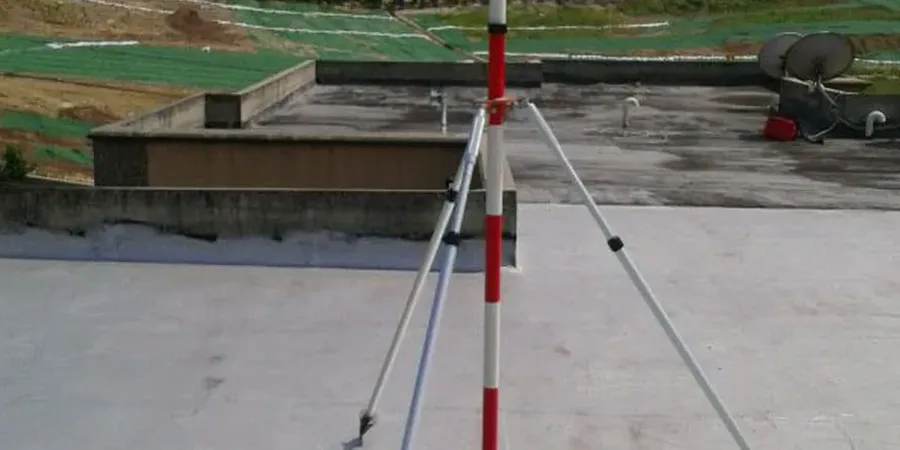
Local geotechnical conditions in Aurora
Aurora’s freeze-thaw cycles, which can penetrate to 42 inches below grade in an average winter, create a seasonal risk that is easy to underestimate in monitoring programs designed solely for construction-phase loads. When frost heave relaxes in March, the apparent rebound in inclinometer casings can be misinterpreted as wall movement unless the baseline readings are temperature-corrected and referenced to deep datum points anchored below the zone of seasonal influence. The same sensitivity applies to the stiff, overconsolidated tills that dominate the east side of the city: they stand well in the short term but can soften progressively once exposed to spring infiltration, producing delayed lateral strains that only become visible after three or four weeks of continuous data collection. A monitoring plan that ignores these seasonal effects will either trigger false alarms or, worse, miss a genuine trend until it appears in the adjacent sidewalk as a crack.
Our services
Our Aurora monitoring packages are structured to match the excavation support type and the sensitivity of the surrounding infrastructure, with all instrumentation calibrated through our ISO/IEC 17025-accredited metrology program.
Deep Excavation Inclinometer Arrays
Continuous digital inclinometer profiling through PVC casing installed behind soldier pile and lagging walls, with deflection curves plotted daily against the pre-construction design envelope.
Piezometer Networks & Dewatering Verification
Vibrating wire and standpipe piezometers installed in nested configurations to track groundwater drawdown across multiple aquifer lenses, confirming that the dewatering system is achieving the target phreatic surface.
Optical Survey & Crack Monitoring
Robotic total station monitoring of prisms mounted on adjacent buildings, plus digital crack gauges on brittle utilities, with automated threshold alerts sent to the project team when movement exceeds 80% of the allowable limit.
Frequently asked questions
What is the typical cost range for excavation monitoring on a commercial project in Aurora?
For a standard commercial excavation with inclinometer casings, piezometers, and optical survey points, the instrumentation and monitoring program typically falls between US$720 and US$2,500 per month depending on the number of instruments, reading frequency, and reporting requirements.
How quickly can monitoring data be turned around after a reading?
Field readings are uploaded to our cloud platform within two hours of collection, and the interpreted report—with deflection plots, piezometric contours, and a narrative summary—is delivered to the project team by 8:00 AM the following business day. For high-risk cuts near critical infrastructure, same-evening preliminary data is available.
What triggers an alert level during excavation monitoring in Aurora soils?
Alert thresholds are project-specific and defined in the instrumentation plan, but our standard practice sets the notification level at 80% of the design deflection limit. If movement reaches that value, an automated alert is sent to the contractor, structural engineer, and geotechnical engineer so that a review of support conditions can be completed before the next lift proceeds.